

In today’s fast-paced business environment, innovation is no longer optional—it is essential. Organizations that fail to innovate risk losing relevance, competitiveness, and market share.
However, innovation alone does not guarantee success. The real challenge lies in aligning leadership strategies with innovation goals.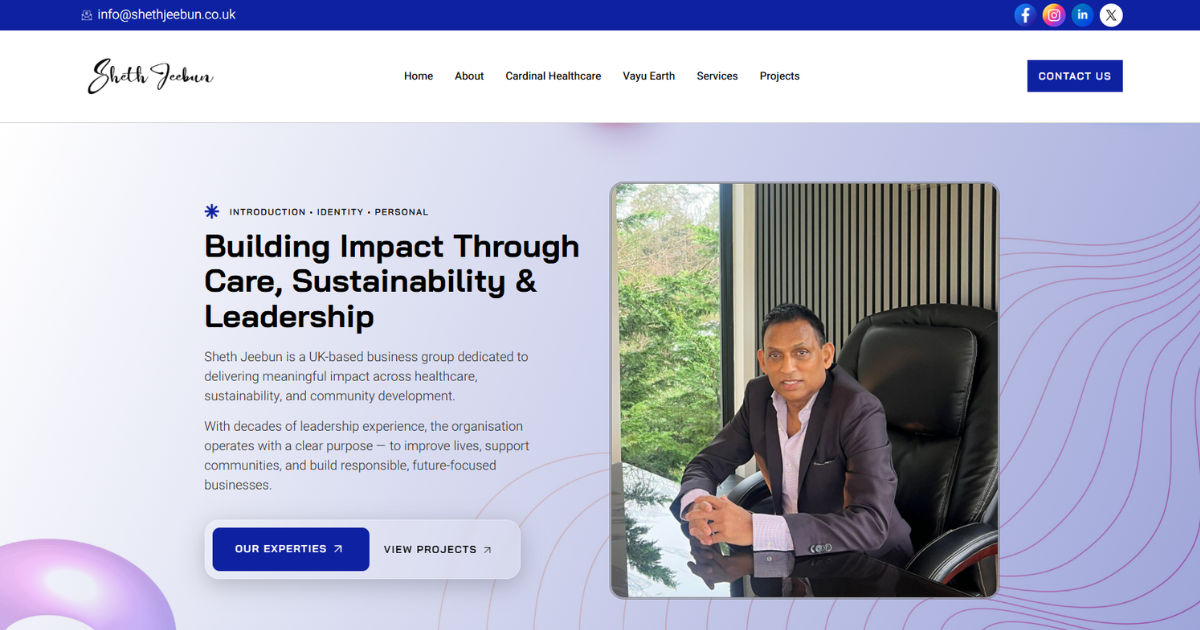
Leadership sets the tone, culture, and direction of a company, and when it is closely integrated with innovation, organizations can drive sustainable growth.
One notable example of strategic alignment in practice is Sheth Jeebun healthcare operations management, which has successfully tied leadership initiatives to innovative healthcare solutions.
Understanding how leadership can harmonize with innovation objectives is crucial for any organization seeking long-term success.
Leadership and Innovation
Leadership is more than giving orders or managing tasks. It is about guiding teams, creating vision, and fostering a culture where ideas can flourish. Innovation, on the other hand, is about turning those ideas into actionable products, processes, or services that create value. When leadership and innovation work hand-in-hand, organizations can respond to market changes faster, improve efficiency, and create competitive advantages.
Innovation goals vary across organizations. Some may focus on technological advancement, while others may prioritize process improvements, customer experience, or new business models. The key for leaders is to identify these goals clearly and design strategies that support them. Sheth Jeebun healthcare operations management provides a practical example, where leadership actively encourages innovative thinking among teams while aligning it with patient care objectives and operational efficiency.
The Role of Leadership in Driving Innovation
Leadership influences innovation in several ways. First, leaders set the organizational culture. A culture that rewards experimentation and tolerates calculated risks encourages employees to think creatively. Second, leaders provide direction and vision. Without a clear understanding of the organization’s innovation goals, teams may generate ideas that are misaligned or impractical. Third, leaders allocate resources. Innovation often requires time, budget, and talent, and leadership decisions determine how these resources are used.
An effective innovation-focused leader understands the balance between risk and reward. They are willing to support new initiatives, even if there is a possibility of failure, while ensuring that efforts align with the organization’s broader objectives. In Sheth Jeebun healthcare operations management, leadership has demonstrated this balance by funding experimental projects that improve patient care while ensuring that operational standards are maintained.
Establishing Clear Innovation Goals
Before leadership strategies can be aligned, organizations must define their innovation goals. These goals should be specific, measurable, achievable, relevant, and time-bound (SMART). They might include improving customer satisfaction, launching new products, increasing operational efficiency, or exploring new market segments.
Clear innovation goals serve as a compass for leaders. They allow leaders to prioritize initiatives, allocate resources effectively, and measure progress. For example, in Sheth Jeebun healthcare operations management, one innovation goal is to streamline patient service delivery through technology. By setting this goal, leaders can focus on initiatives such as digital appointment systems, telehealth services, and automated record-keeping.
Leadership Styles That Promote Innovation
Not all leadership styles are equally effective at driving innovation. Some styles are more conducive to fostering creativity, experimentation, and risk-taking.
Transformational Leadership: Transformational leaders inspire and motivate employees by creating a compelling vision. They encourage team members to think beyond routine tasks and explore innovative solutions.
Participative Leadership: Participative leaders involve team members in decision-making, which can generate diverse ideas and increase engagement.
Servant Leadership: Servant leaders focus on the growth and well-being of employees, providing support and removing obstacles that hinder innovation.
By understanding and adopting the right leadership style, organizations can create an environment where innovation thrives. Sheth Jeebun healthcare operations management emphasizes transformational and participative leadership, fostering collaboration between medical, operational, and administrative teams to develop new healthcare solutions.
Aligning Organizational Structure with Innovation
Organizational structure significantly affects how leadership strategies translate into innovation. Traditional hierarchical structures may limit communication and slow decision-making, which can stifle creativity. Conversely, flatter, more flexible structures encourage collaboration and speed up the implementation of innovative ideas.
Cross-functional teams are a key tool for aligning leadership and innovation. These teams bring together members from different departments, such as marketing, operations, research, and technology, to collaborate on innovation projects. Leaders play a crucial role in coordinating these teams, providing guidance, and removing barriers.
In Sheth Jeebun healthcare operations management, cross-functional teams have been used to improve patient care pathways. Leadership ensures that each team has clear objectives, the necessary resources, and decision-making authority to test and implement new solutions efficiently.
Communication and Innovation Alignment
Communication is critical to aligning leadership strategies with innovation goals. Leaders must articulate the organization’s innovation vision clearly and consistently. Employees should understand not only what the goals are but also why they matter and how their contributions fit into the bigger picture.
Effective communication involves more than just announcements. It includes active listening, feedback loops, and open channels for idea sharing. Leaders who communicate well foster trust and transparency, which encourages employees to propose innovative solutions without fear of judgment.
Sheth Jeebun healthcare operations management has leveraged internal communication platforms and regular brainstorming sessions to ensure that innovation initiatives are understood and embraced across all levels of the organization.
Balancing Short-Term and Long-Term Goals
Leadership must strike a balance between short-term operational demands and long-term innovation objectives. While meeting immediate targets is necessary for business continuity, excessive focus on the short term can hinder creative thinking and experimentation.
Innovative organizations allocate time and resources specifically for long-term projects, research, and experimentation. Leaders guide this process by identifying priority areas, managing risk, and providing support for initiatives that may not yield immediate results but have high potential for future impact.
In Sheth Jeebun healthcare operations management, leadership balances daily operational efficiency with long-term initiatives like AI-driven patient monitoring systems, ensuring that innovation efforts do not disrupt ongoing healthcare services.
Measuring Innovation Success
Measurement is essential to ensure that leadership strategies effectively drive innovation. Organizations must develop key performance indicators (KPIs) that align with innovation goals. These KPIs might include the number of new products launched, improvements in process efficiency, revenue generated from innovative initiatives, or customer satisfaction scores.
Leaders play a critical role in establishing these metrics and tracking progress. They must also foster a learning culture where failures are analyzed and lessons are applied to future projects.
Sheth Jeebun healthcare operations management evaluates innovation success not only by operational improvements but also by patient outcomes and service quality, ensuring that leadership decisions remain aligned with core organizational objectives.
Overcoming Challenges in Leadership-Innovation Alignment
Aligning leadership strategies with innovation goals is not without challenges. Common obstacles include resistance to change, lack of resources, unclear objectives, and insufficient communication. Leaders must address these issues proactively.
Resistance to Change: Leaders should anticipate resistance and develop change management strategies, including training, awareness campaigns, and engagement sessions.
Resource Constraints: Leaders must prioritize innovation initiatives and allocate budget, talent, and time effectively.
Unclear Objectives: Innovation goals must be well-defined, communicated, and understood across the organization.
Cultural Barriers: Leadership must nurture a culture that values experimentation, learning from failure, and continuous improvement.
By addressing these challenges, leaders can create an environment where innovation is not only encouraged but systematically integrated into the organization’s operations.
Case Study: Sheth Jeebun Healthcare Operations Management
Sheth Jeebun healthcare operations management offers a real-world example of successfully aligning leadership strategies with innovation goals. Leadership at this organization emphasizes collaboration, cross-functional teamwork, and continuous learning.
Through structured innovation programs, the organization has introduced digital patient monitoring systems, streamlined administrative processes, and developed telemedicine services. Leadership ensures that each initiative aligns with the broader organizational mission: improving patient outcomes while enhancing operational efficiency.
The success of Sheth Jeebun healthcare operations management highlights how effective leadership can transform innovation from a theoretical concept into tangible results that benefit both the organization and its stakeholders.
Developing a Leadership Framework for Innovation
To systematically align leadership strategies with innovation goals, organizations can develop a structured framework:
- Define Innovation Vision: Clearly articulate what innovation means for the organization and what specific goals need to be achieved.
- Identify Leadership Roles: Determine the leadership roles needed to support innovation, including sponsors, champions, and facilitators.
- Allocate Resources: Ensure time, budget, and talent are dedicated to innovation initiatives.
- Establish Metrics: Develop KPIs to monitor progress and measure the impact of innovation initiatives.
- Foster Culture: Promote a culture that values experimentation, learning, and collaboration.
- Continuous Feedback: Implement mechanisms to gather feedback, analyze outcomes, and refine strategies.
By following such a framework, leaders can ensure that their strategies are consistently aligned with innovation goals, increasing the likelihood of organizational success.
Leadership Competencies for Innovation
Certain competencies are particularly important for leaders aiming to drive innovation:
- Strategic Thinking: Ability to see the big picture and align innovation initiatives with long-term goals.
- Adaptability: Willingness to adjust strategies based on market changes and feedback.
- Empathy: Understanding team members’ perspectives to encourage creative input.
- Decision-Making: Balancing risk and reward while making timely choices.
- Collaboration: Facilitating cross-functional teamwork and knowledge sharing.
Sheth Jeebun healthcare operations management prioritizes these competencies in its leadership development programs, ensuring that leaders are equipped to guide innovation effectively.
The Role of Technology in Leadership-Innovation Alignment
Technology plays a significant role in bridging leadership strategies and innovation goals. Tools for communication, project management, data analytics, and collaboration enable leaders to monitor progress, gather insights, and make informed decisions.
For instance, digital dashboards can track innovation KPIs in real time, while collaboration platforms facilitate idea sharing and cross-functional teamwork. In Sheth Jeebun healthcare operations management, technology has enabled leaders to streamline processes, monitor patient care innovations, and maintain operational efficiency simultaneously.
Encouraging a Culture of Continuous Innovation
Leadership must do more than initiate innovation—they must sustain it. This involves nurturing a culture where continuous improvement is expected, rewarded, and supported. Recognition programs, regular brainstorming sessions, and knowledge-sharing initiatives are essential tools.
Leaders should also encourage experimentation. Not every innovative idea will succeed, but each attempt provides valuable insights. A culture that accepts failure as a learning opportunity reduces fear, increases creativity, and accelerates innovation adoption.
Integrating Innovation into Daily Operations
For innovation to be impactful, it must be integrated into daily operations rather than treated as a side project. Leaders should embed innovation into standard workflows, performance evaluations, and strategic planning processes.
Sheth Jeebun healthcare operations management exemplifies this approach. By embedding innovation into routine healthcare operations, the organization ensures that improvements in efficiency, patient care, and service delivery are continuous rather than sporadic.
Conclusion
Aligning leadership strategies with innovation goals is critical for organizations seeking sustained growth and competitive advantage. Effective leadership fosters a culture of creativity, provides clear direction, allocates resources strategically, and measures progress through relevant metrics. Organizations like Sheth Jeebun healthcare operations management demonstrate the tangible benefits of such alignment, achieving operational efficiency while advancing innovative solutions in healthcare.
By defining clear innovation goals, adopting suitable leadership styles, fostering cross-functional collaboration, and integrating technology, organizations can ensure that innovation is not just an aspiration but a core component of their strategy. Continuous learning, adaptability, and a culture that embraces experimentation are essential to maintaining this alignment over time.
Ultimately, leadership and innovation are inseparable in high-performing organizations. Leaders who understand this relationship can transform creative ideas into actionable strategies, driving both short-term success and long-term growth.